Organization and Governance

Who We Are
Plus Ultra Collective is a 501 (c) 3 nonprofit organization founded in 2025 to bring scholars, practitioners, students, and public audiences together around the study of intercultural and interreligious cooperation and conflict. We combine humanistic research, public scholarship, digital humanities, and thoughtful technology to make complex histories more accessible, collaborative, and impactful.
“Plus Ultra” means “go beyond.” It evokes intellectual courage, the pursuit of knowledge, and the willingness to move beyond inherited boundaries. “Collective” expresses our belief that meaningful understanding and lasting public impact emerge through shared work, collaboration, and the recognition that no single scholar, institution, or community can do this work alone.

Our Vision and Mission
Our vision – A world where diverse communities choose cooperation over conflict, and where the humanities and technology work together to deepen that understanding across borders, disciplines, and generations.
Our mission – Plus Ultra Collective brings together scholars, practitioners, and learners across borders to advance understanding of how diverse communities have — and can — cooperate across cultural and religious differences. We do this through shared inquiry, collaborative programs, and the thoughtful use of technology to make knowledge more accessible and impactful.
Our core values – Intellectual Courage. We go beyond accepted boundaries in knowledge and method. Collaboration over Competition. We build together rather than compete for recognition or resources. Scholarly Integrity. We ground our work in rigorous, evidence-based humanistic inquiry. Diverse Perspectives. We draw strength from geographic, disciplinary, cultural, and linguistic diversity. Openness & Egalitarianism. We keep structures lean so creativity and inclusion can thrive. Political Neutrality. We operate without party affiliation or partisan commitments.
Board of Directors
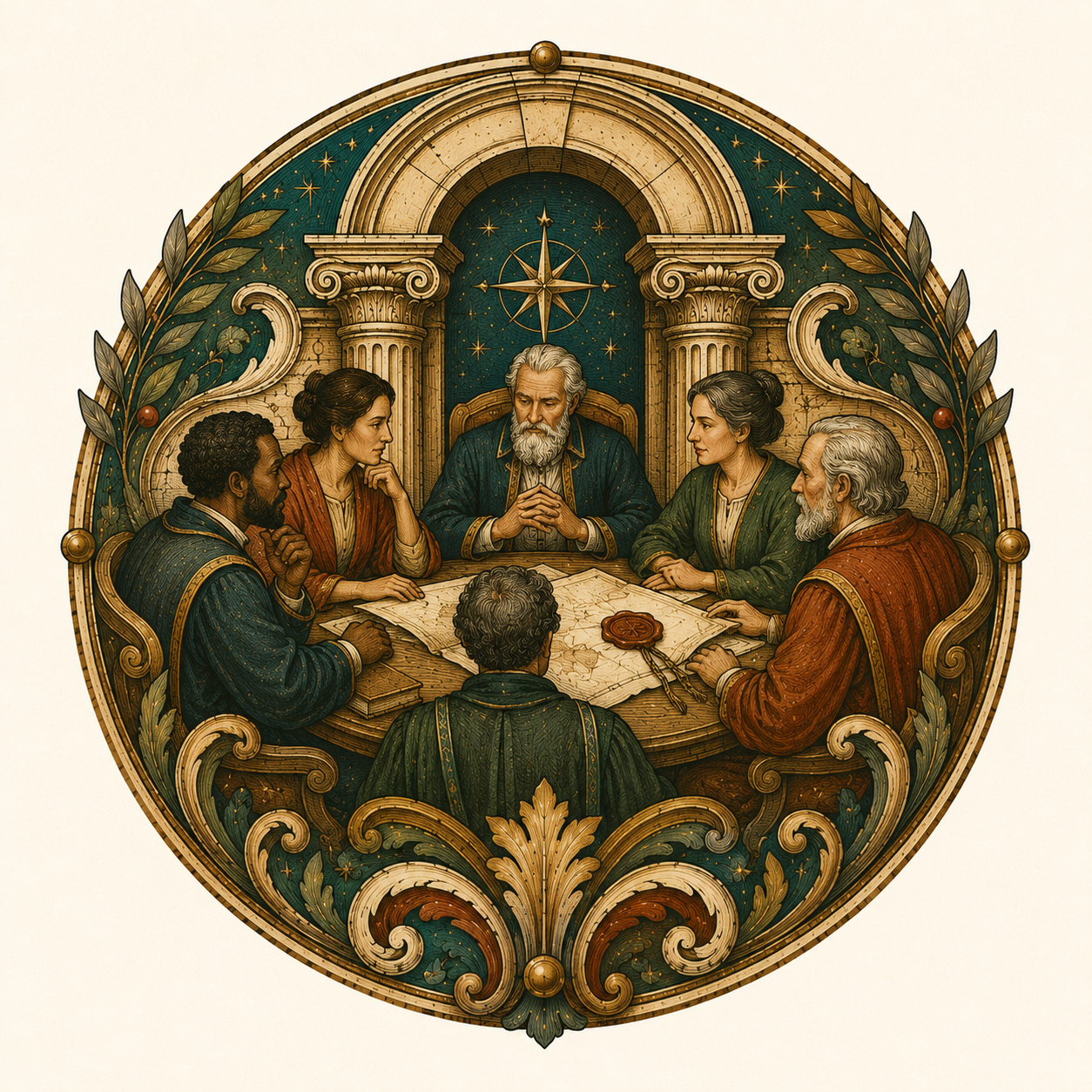
Plus Ultra Collective is governed by a volunteer Board of Directors. As the organization develops, the Board is formalizing meeting cadence (quarterly meetings, presently), decision rules, contributor expectations, financial oversight, and lightweight accountability practices appropriate to a young, collaborative nonprofit.
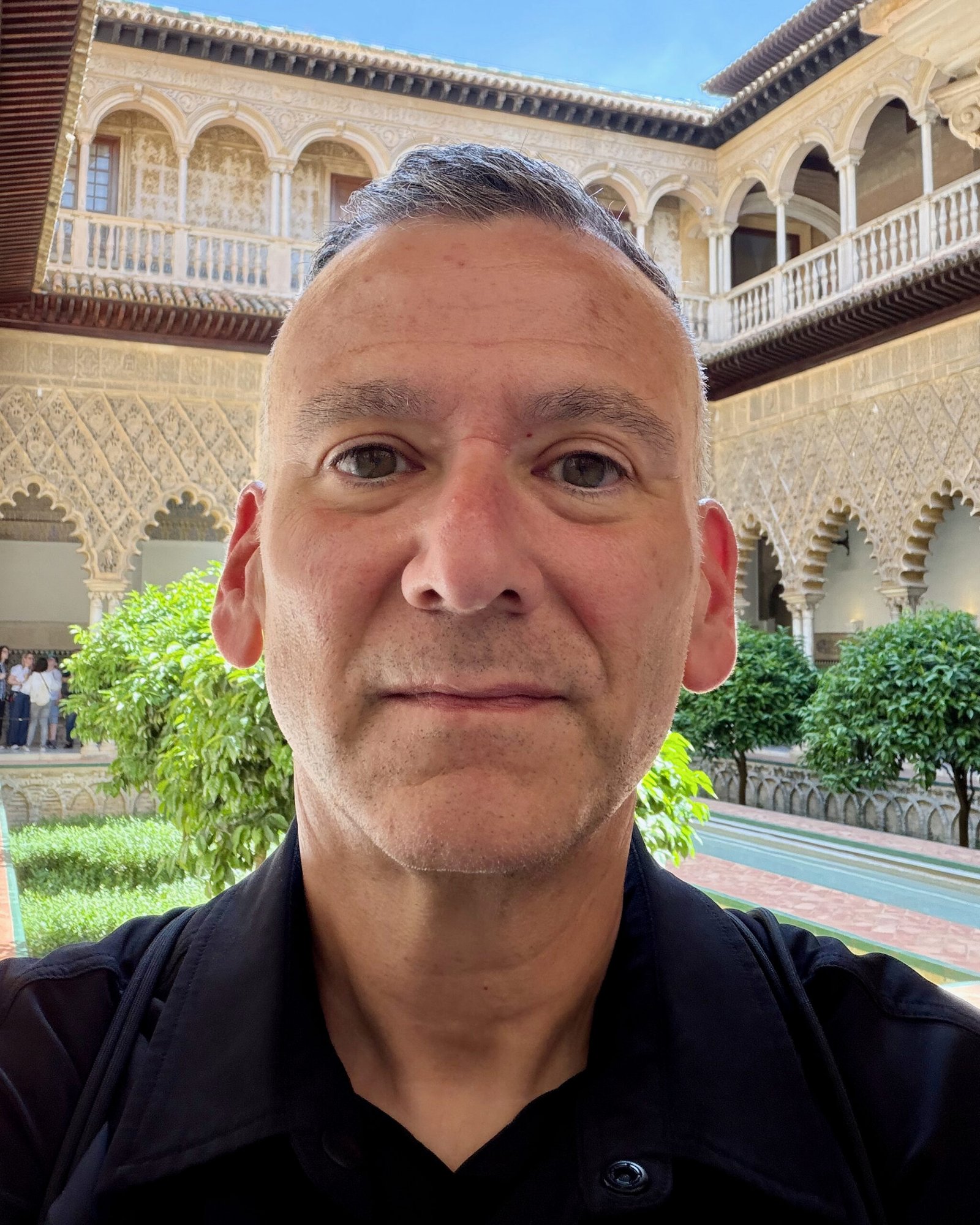
Dr. Roger Martínez-Dávila Chair & Executive Director
Affiliations
University of Colorado, Colorado Springs (USA);
Grupo Historiografía 3.0: humanidades digitales e inteligencia artificial generativa, Universidad Carlos III de Madrid (España).
Organizational Portfolio Coordination, grants, partnerships, digital humanities, responsible AI, archives, and sustainability.
Links
Roger Martínez-Dávila
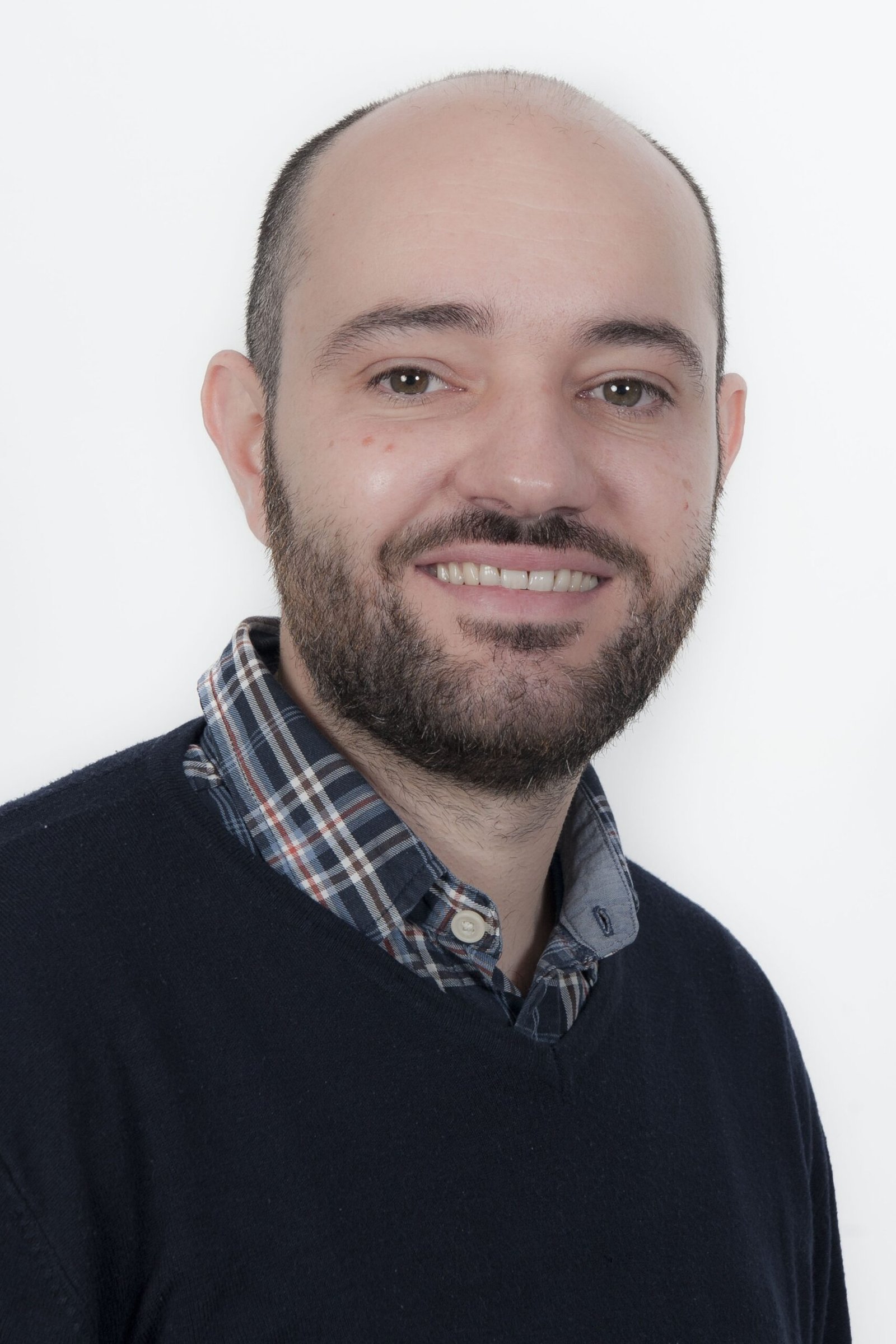
Dr. Ruben Gonzalez Cuerva Board Member
Affiliations
Instituto de Historia, Consejo Superior de Investigaciones Científicas (CSIC)-Madrid (España).
Organizational Portfolio
Public engagement, diplomacy and international order, historical comparison, and institutional connections.
Links
Rubén González Cuerva
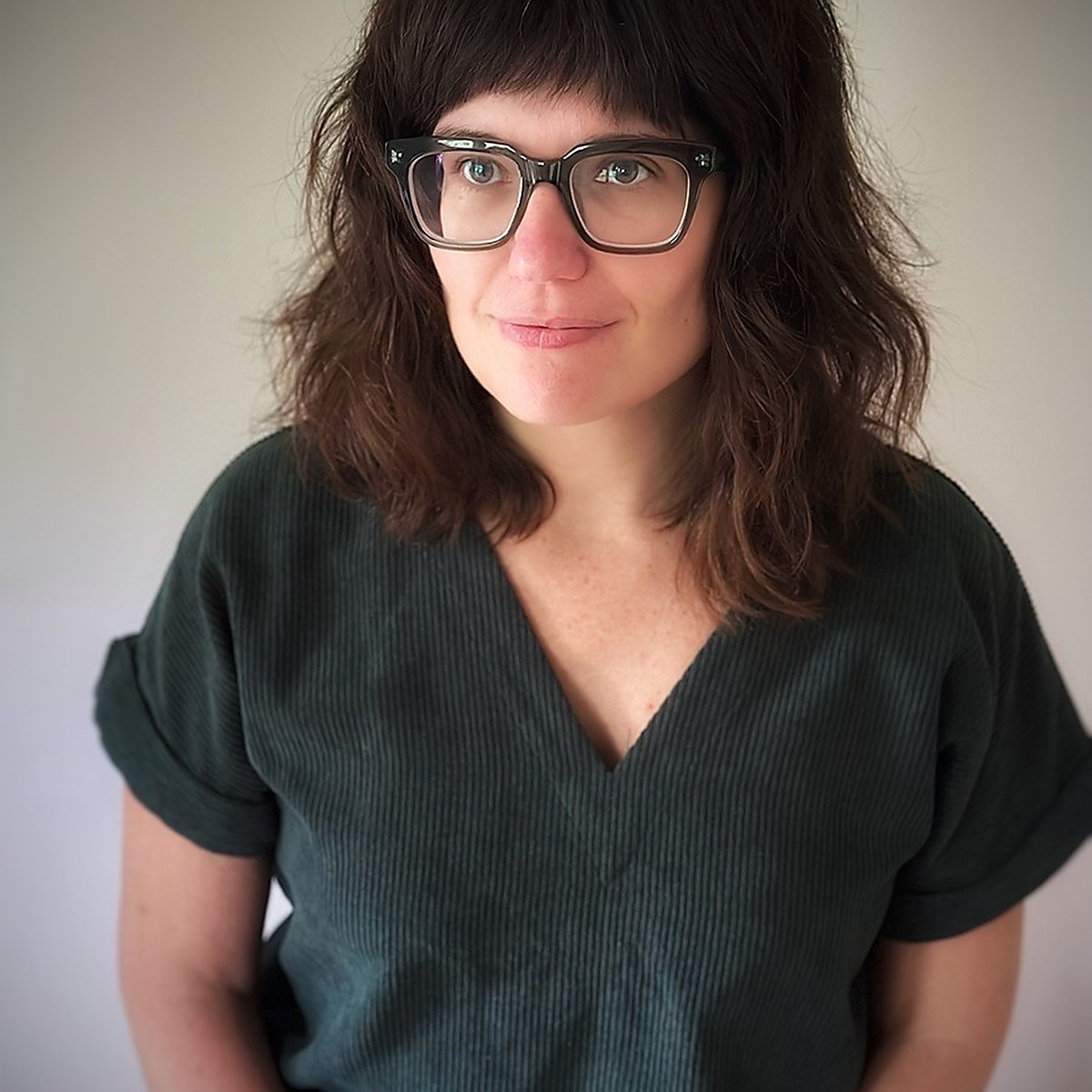
Dr. Andrea Davis
Board Member
Affiliations
Arkansas State University,
Jonesboro, Arkansas (USA)
Organizational Portfolio
Historiography, knowledge infrastructure, digital storytelling, and historians’ changing work.
Links
Andrea Davis
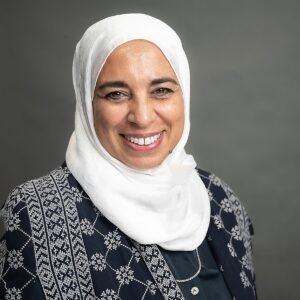
Dr. Hadeer Aboelnagah
Board Member
Affiliations
Prince Sultan University, Riyadh (Saudi Arabia)
Organizational Portfolio Multilingualism, Arabic-language scholarship, Middle Eastern networks, and comparative public humanities.
Links
Hadeer Aboelnagah

Dr. Francisco Garcia Serrano
Board Member
Affiliations
Saint Louis University, Madrid (España) and Center for Iberian Historical Studies, St. Louis, Missouri (USA).
Organizational Portfolio Iberian archives, graduate training, and international educational and research networks.
Links
Francisco García-Serrano

2026-2028 Strategic Priorities
The process gave PUC a shared compass. Its vision is a world where diverse communities choose cooperation over conflict, and where the humanities and technology work together to deepen that understanding across borders, disciplines, and generations. Its mission is to bring together scholars, practitioners, and learners across borders to advance understanding of how diverse communities have—and can—cooperate across cultural and religious differences through shared inquiry, collaborative programs, and the thoughtful use of technology.
The image and pdf below represents the Strategy House guiding PUC’s next phase:
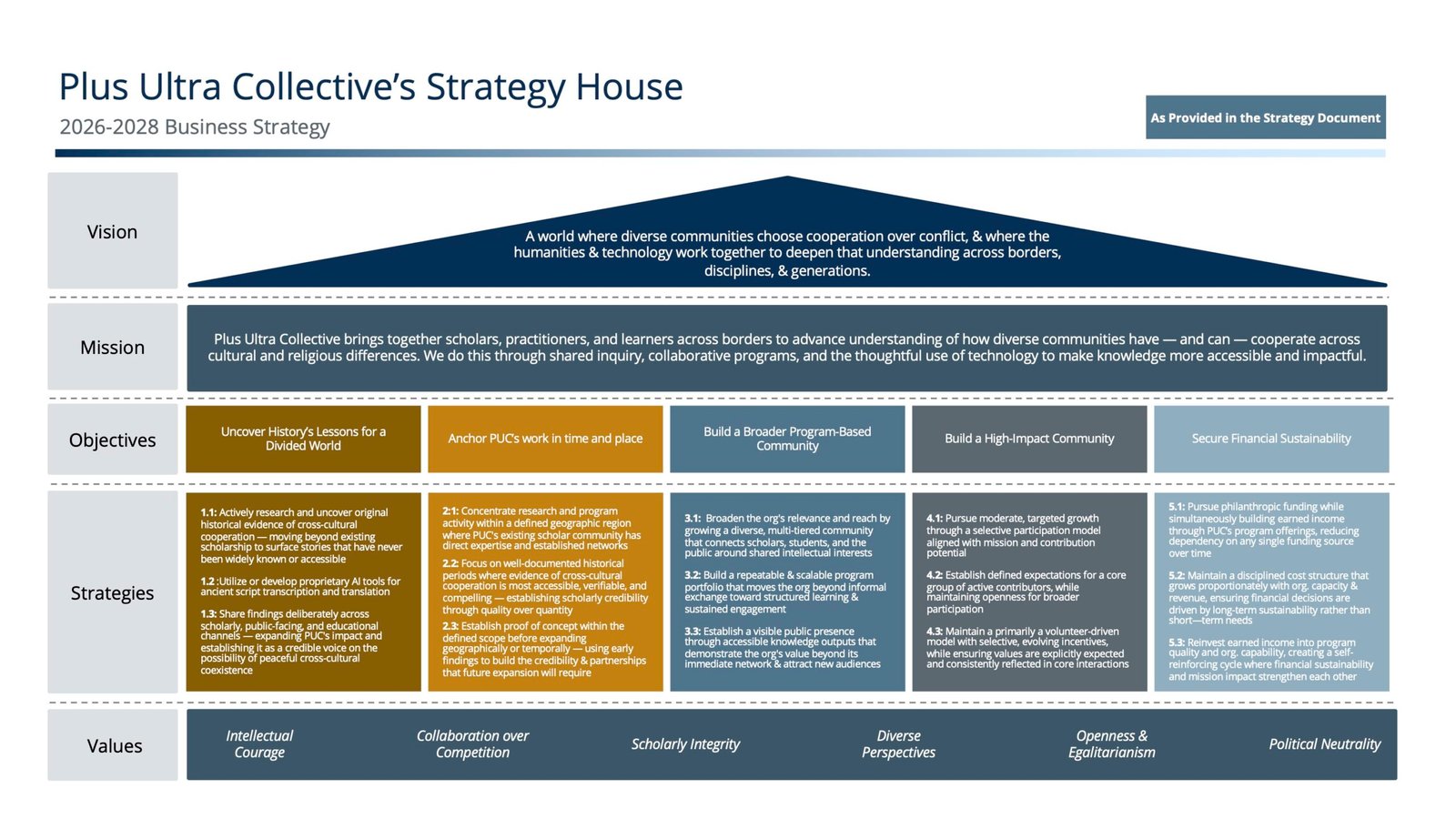
Strategic Priorities
1. Uncover History’s Lessons for a Divided World. We research and share original historical evidence of cross-cultural cooperation.
2. Anchor Our Work in Time and Place. We focus where our collaborators have deep expertise and where evidence is accessible, verifiable, and compelling.
3. Build a Broader Program-Based Community. We move beyond informal exchange toward workshops, courses, convenings, and structured learning.
4. Build a High-Impact Community. We grow intentionally while preserving openness, collaboration, and scholarly integrity.
5. Secure Financial Sustainability. We combine philanthropic support with earned-income programs and disciplined costs.