Public History

  • Sean Wybrant

    Sean Wybrant is Educator; Career and Technical Education Specialist at William J. Palmer High School. Sean Wybrant, an award-winning educator at William J. Palmer High School, specializes in career and technical education, with a focus on integrating emerging technologies into student learning. As the 2017 Colorado Teacher of the Year, he has pioneered projects leveraging augmented and virtual reality (AR/VR) to create immersive educational experiences. His groundbreaking work includes the development of a virtual reality museum exploring the Saipan Maritime Heritage Trail and the Battle of Saipan, fostering global collaboration between students in Colorado and Saipan. Within PUC, their profile connects to vr/xr, public history, pedagogy, cultural heritage.
  • Ian Torres

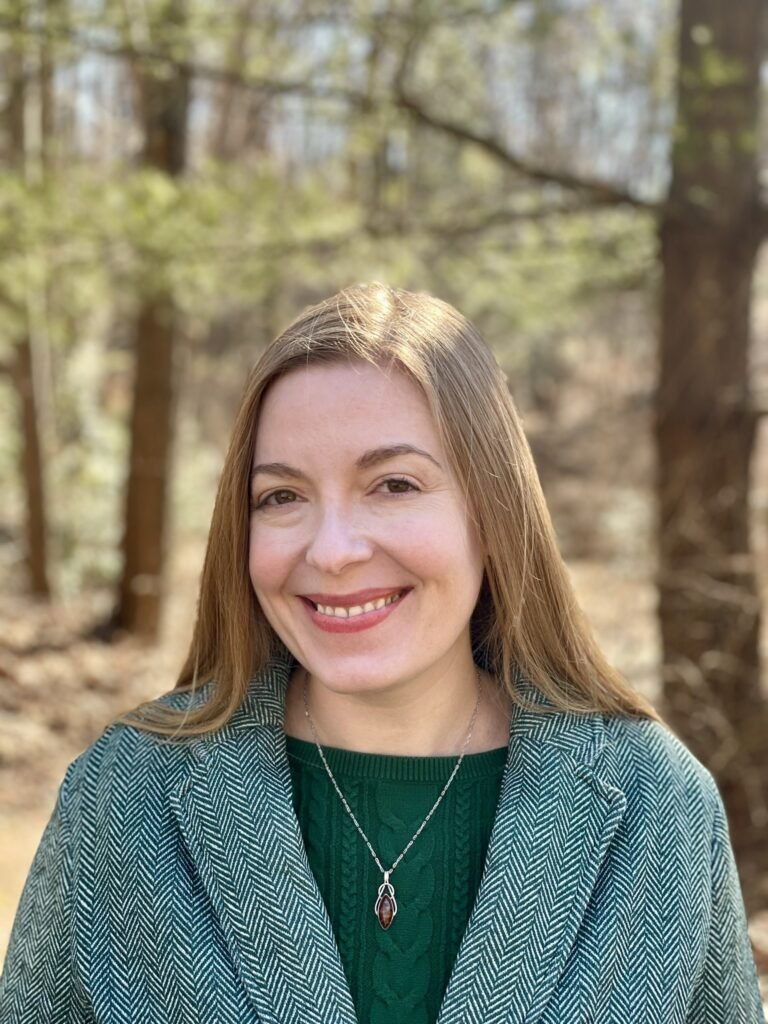
    Ian Torres is a teaching faculty member associated with UCCS and Pikes Peak State College. His background includes graduate training in history at the University of Colorado Colorado Springs. Within Plus Ultra Collective, his profile connects teaching, historical study, and public humanities, contributing to the Collective’s interest in accessible education, collaborative learning, and the translation of scholarly knowledge for broader audiences.

  • Sara Torres

    Sara Torres is Content Strategist; Visiting Scholar at UNM (Visiting Scholar). She has previously held an assistant professorship in English at Converse University, a Third Century Postdoctoral Fellow in Medieval Studies at the University of Virginia, the Speculum Postdoctoral Fellowship at the Medieval Academy of America, and a lectureship at UCLA. Her research interests include global and comparative medieval and early modern studies, translation theory and practice, gender studies, and environmental humanities. Their interests include intercultural and interreligious exchange, migration, diaspora, and mobility, colonialism, empire, and decolonization, science, knowledge, and technology transfer, cultural heritage and material culture, memory, myth, and public history. Within PUC, their profile connects to mapping, manuscripts, public history.

  • Jeffrey William Baron

    Jeffrey William Baron is PhD Candidate in History at University of Rochester. Baron is a PhD candidate in History at the University of Rochester. His dissertation explores the legal traditions and licensing policies governing the excavation of buried treasure in the medieval and early modern Hispanic world. Their interests include intercultural and interreligious exchange, migration, diaspora, and mobility, colonialism, empire, and decolonization, cultural heritage and material culture, legal and inquisitorial history, identity, race, and ethnicity in historical contexts. Within PUC, their profile connects to ai, vr/xr, mapping, manuscripts, public history, pedagogy.

  • Patricia Schechter

    Patricia Schechter is Professor of History at Portland State University (Oregon, USA). She received her BA in American Studies magna cum laude from Mount Holyoke College and then her PhD in History from Princeton University. Her first book, Ida B. Wells-Barnett and American Reform (UNC Press, 2001) won the Sierra Book Prize from the Western Association of Women Historians. Her subsequent publications and public history projects have been recognized for their excellence by the Oral History Association, Library Choice, and the American Philosophical Society, among others. Their interests include migration, diaspora, and mobility, trade, economy, and global networks, cultural heritage and material culture, identity, race, and ethnicity in historical contexts, memory, myth.

  • Daniel Tejerina

    Daniel Tejerina is Junior Research Fellow at University of Alicante. I’m a Junior Research Fellow at the University Institute for Archaeology and Historical Heritage (INAPH) of the University of Alicante, specialising in the application of digital technologies to cultural heritage. My work focuses on 3D survey, virtual reconstruction, immersive VR/AR experiences and digital museography, combining archaeological research with advanced digital workflows. Their interests include trade, economy, and global networks, science, knowledge, and technology transfer, cultural heritage and material culture. Within PUC, their profile connects to ai, vr/xr, mapping, manuscripts, archives, public history.

  • Victor Temprano

    Victor Temprano is Independent Scholar; Software Developer; Writer at Independent Scholar. He is the founder of Native-Land.ca and the CEO of Mapster Technology Inc. and has worked on dozens of projects in the Digital Humanities. He is the creator of numerous online courses on digital mapping, project management, and programming, and also runs a Youtube channel focused on the history of unusual maps. He works with scholars and academics around the world to help hone concepts and implement new projects with agility and imagination. Their interests include intercultural and interreligious exchange, migration, diaspora, and mobility, colonialism, empire, and decolonization, trade, economy, and global networks, science, knowledge, and technology transfer, cultural heritage and.

  • Karen Pinto

    Karen Pinto is Historian of Islamic Cartography at University of Colorado Boulder. She has spent three decades examining maps in manuscript collections around the world. She has a 2000-strong image repository of Islamic maps—many that have never been published before. Her book Medieval Islamic Maps: An Exploration was published in November 2016 by University of Chicago Press and won a 2017 OAT (Outstanding Academic Title) award from Choice. Their interests include science, knowledge, and technology transfer, cultural heritage and material culture, religious and intellectual history, memory, myth, and public history, medieval islamic maps. Within PUC, their profile connects to vr/xr, mapping, manuscripts, archives, public history, pedagogy.

  • Aurélia Rostaing

    Aurélia Rostaing is Archive Curator at Archives nationales (France). Archive curator since 1996, currently working at National Archives of France. Their interests include science, knowledge, and technology transfer, cultural heritage and material culture, legal and inquisitorial history, memory, myth, and public history. Within PUC, their profile connects to manuscripts, archives, public history, pedagogy, digital humanities, translation. This work supports PUC’s broader effort to connect rigorous scholarship, public access, and cross-border collaboration around histories of cultural and religious difference.

  • Carlos Sanz Díaz

    Carlos Sanz Díaz is Professor of Contemporary History at Universidad Complutense de Madrid. His research explores Spain’s role in European institutions, diplomatic negotiations, and transnational exchanges between Spain and Latin America. He currently holds a Jean Monnet Chair on the History of Europe and European Integration (funded by the European Commission) and leads the research project “Spain in Europe: Power and Influence in the European Community (1986–2004)”, funded by the Spanish Ministry of Science. Their interests include migration, diaspora, and mobility, science, knowledge, and technology transfer, memory, myth, and public history. Within PUC, their profile connects to ai, vr/xr, manuscripts, public history, pedagogy, digital humanities.