Manuscripts

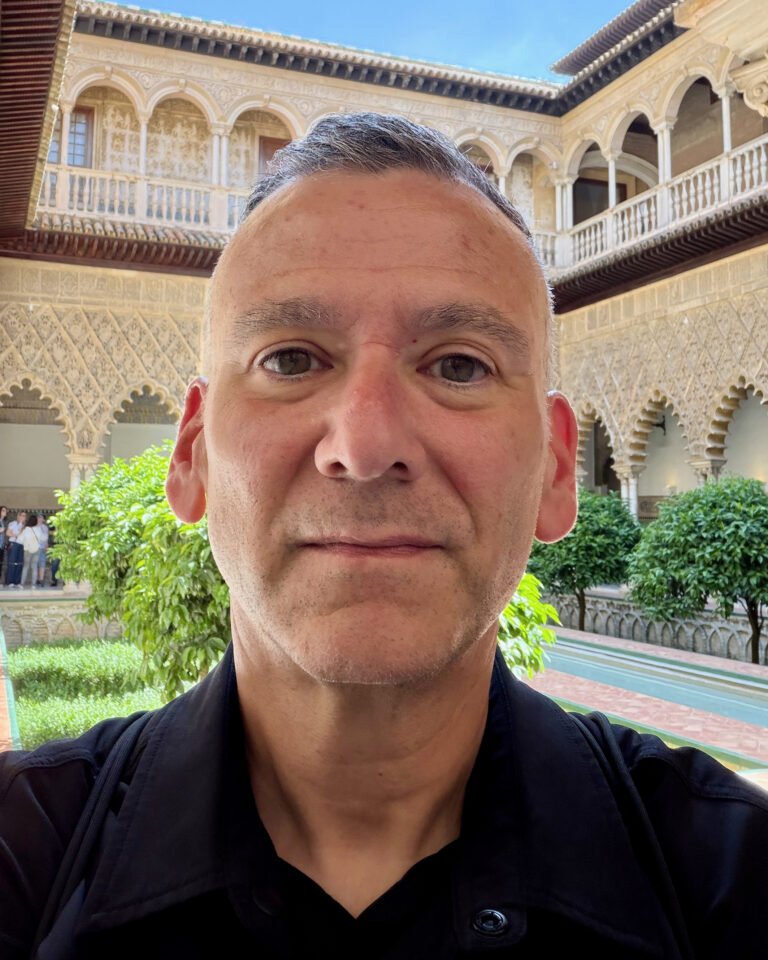
  • Roger Martínez-Dávila

    Roger Martínez-Dávila is Professor of History; Researcher at University of Colorado Colorado Springs; Universidad Carlos III de Madrid. Roger Martínez-Dávila is a historian and digital humanist specializing in medieval Europe and the Mediterranean, focusing on Christian, Jewish, and Islamic interrelations. He earned his PhD in history from the University of Texas at Austin. Notably, he leads the Deciphering Secrets: Unlocking the Manuscripts of Medieval Spain project and co-directed the NEH Immersive Global Middle Ages Advanced Digital Humanities Institute. Their interests include intercultural and interreligious exchange, trade, economy, and global networks, science, knowledge, and technology transfer, religious and intellectual history, identity, race, and ethnicity in historical contexts. Within PUC, their profile connects to.
  • Austin Mason

    Austin Mason is Assistant Director of Digital Humanities at Carleton College. He holds a PhD in History from Boston College, with an emphasis on religious history, material culture, archaeology, spatial humanities and the digital humanities, and an M.St. in Medieval British History from Oxford University. His work has been supported by grants from the ACLS, Mellon Foundation, and National Endowment for the Humanities, among others. He is the co-PI for an NEH Digital Humanities Advancement Grant to develop the Virtual Viking Longship Project: A Study in the Future of Liberal Arts Teaching and Research. Their interests include intercultural and interreligious exchange, migration, diaspora, and mobility, trade, economy, and global networks, cultural heritage.

  • Brittany Lugo

    Brittany Lugo is affiliated with Fordham University. Her work contributes to Plus Ultra Collective’s interdisciplinary community through interests in historical research, teaching, and public-facing humanities inquiry. Within PUC, her profile supports the Collective’s broader effort to connect scholars, educators, and learners around questions of cultural exchange, historical interpretation, and collaborative knowledge-making across institutional and disciplinary boundaries.

  • Anthony John Lappin

    Anthony John Lappin is Lecturer in Spanish at Stockholms Universitet. He is also enraptured by the theatricality of the Baroque. Their interests include intercultural and interreligious exchange, colonialism, empire, and decolonization, cultural heritage and material culture, legal and inquisitorial history, religious and intellectual history, memory, myth, and public history. Within PUC, their profile connects to manuscripts, public history, pedagogy, digital humanities, translation, cultural heritage. This work supports PUC’s broader effort to connect rigorous scholarship, public access, and cross-border collaboration around histories of cultural and religious difference.

  • Gavin H. Rogers

    Gavin H. Rogers is a doctoral student at the University of New Mexico specializing in Jewish life in the Iberian Peninsula. He also investigates historical network formations at the intersection of economics and the environment. A recipient of the 2023 International Congress on Medieval Studies Tashjian Award, he contributes to PUC’s work on Iberian history, Jewish studies, networks, and digital approaches to historical evidence.

  • Annabel Hancock

    Annabel Hancock is Postdoctoral Associate Member; Visiting Research Scholar at University of Oxford / University of Maryland. She is a historian of trust, trade, movement, identity, and documentary cultures in the Medieval Mediterranean. She is currently working on a book manuscript on Trust in Medieval Trade and planning a new research project exploring how enslaved individuals shaped economic, cultural, and social relationships in the Mediterranean, considering the language used to speak about enslaved people, how the presence of enslaved peoples affected the language of commerce, trust, and risk, and how enslaved individuals took part in the documentary culture of the Crown of Aragon. Their interests include intercultural and interreligious exchange, migration, diaspora.

  • Marina Gómez Rey

    Marina Gómez Rey is Generative AI Specialist at UC3M. Since then, she has built her expertise in this field, working in both the private and public sectors on projects such as BADDO, which intents to overcome the barries between history and AI. A history enthusiast with a particular love for ancient history and archaeology, Marina took a course in Roman archaeology during her Erasmus in Rome. Their interests include intercultural and interreligious exchange, cultural heritage and material culture, memory, myth, and public history. Within PUC, their profile connects to ai, mapping, manuscripts, public history, pedagogy, digital humanities.

  • Rubén González Cuerva

    Rubén González Cuerva is Permanent Scientist at CSIC. He has been postdoctoral fellow at the National University of Salta (Argentina), Marie Curie Fellow at the German Historical Institute of Rome, Juan de la Cierva Postdoctoral Researcher at the CSIC, and associate lecturer at the Autonomous University of Madrid and the Complutense University. Currently, he directs the DIPLOINMED project (awarded by the Spanish National Research Agency), which analyses cross-confessional and global diplomacy in the sixteenth and seventeenth centuries as well as the establishment of diplomatic relations between the Spanish Monarchy and Muslim polities. Their interests include intercultural and interreligious exchange, colonialism, empire, and decolonization, cultural heritage and material culture, diplomatic history. Within PUC.

  • Estelle Guéville

    Estelle Guéville is Curator and PhD Candidate in Medieval Studies at Yale University. She previously graduated in History, Art History and the Management of Cultural Heritage from Université Paris 1 Panthéon Sorbonne. Before joining Yale, she worked for several cultural institutions in France and the Gulf, including the Louvre Abu Dhabi, the Bibliothèque nationale de France and the Musée national du Moyen Age – Thermes de Cluny in Paris. Their interests include intercultural and interreligious exchange, cultural heritage and material culture, religious and intellectual history, identity, race, and ethnicity in historical contexts, memory, myth, and public history. Within PUC, their profile connects to ai, mapping, manuscripts, archives, public history, pedagogy.

  • Alfonso García Sánchez

    Alfonso García Sánchez is PhD Student in Geography and History at Carlos III university. A graduate in Geography and History (University of Jaén) with a Master’s Degree in Compulsory Secondary Education and Baccalaureate Teaching, Vocational Training and Language Teaching (University of Jaén) and a Master’s Degree in the Science of Religions: History and Society (ULL, UC3M, and UPO). He is currently a pre-doctoral fellow and PhD candidate in Humanities at the Carlos III University of Madrid. Their interests include religious and intellectual history, identity, race, and ethnicity in historical contexts, memory, myth, and public history. Within PUC, their profile connects to ai, mapping, manuscripts, public history, pedagogy, digital humanities.