Digital Humanities

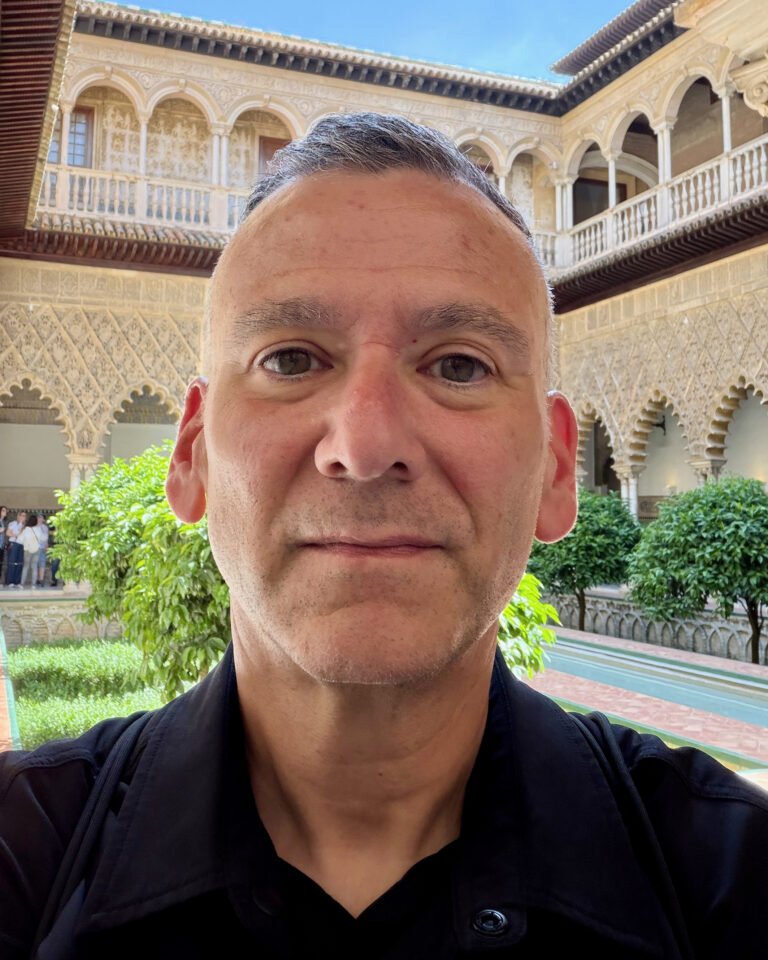
  • Roger Martínez-Dávila

    Roger Martínez-Dávila is Professor of History; Researcher at University of Colorado Colorado Springs; Universidad Carlos III de Madrid. Roger Martínez-Dávila is a historian and digital humanist specializing in medieval Europe and the Mediterranean, focusing on Christian, Jewish, and Islamic interrelations. He earned his PhD in history from the University of Texas at Austin. Notably, he leads the Deciphering Secrets: Unlocking the Manuscripts of Medieval Spain project and co-directed the NEH Immersive Global Middle Ages Advanced Digital Humanities Institute. Their interests include intercultural and interreligious exchange, trade, economy, and global networks, science, knowledge, and technology transfer, religious and intellectual history, identity, race, and ethnicity in historical contexts. Within PUC, their profile connects to.
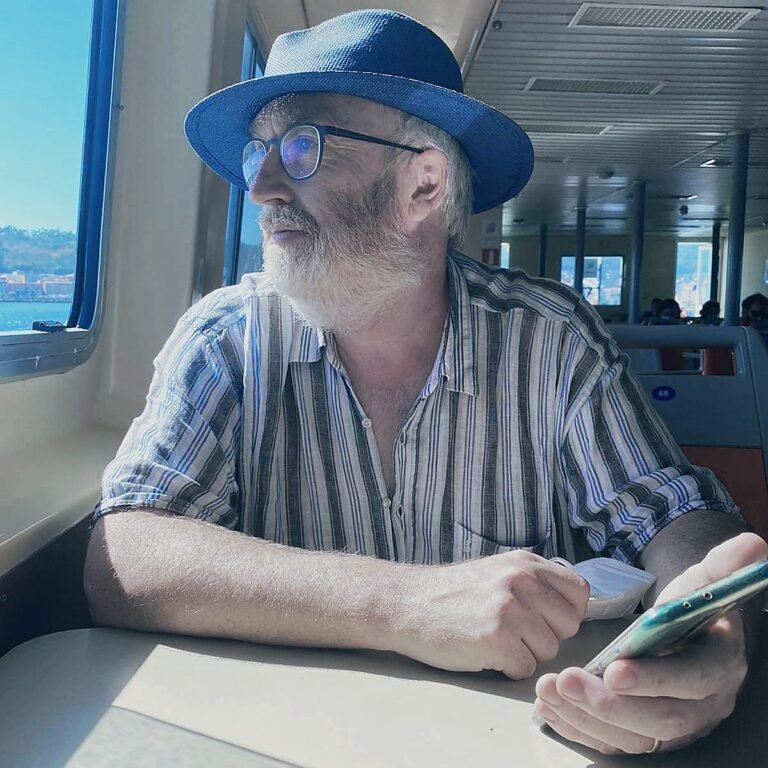
  • Anthony John Lappin

    Anthony John Lappin is Lecturer in Spanish at Stockholms Universitet. He is also enraptured by the theatricality of the Baroque. Their interests include intercultural and interreligious exchange, colonialism, empire, and decolonization, cultural heritage and material culture, legal and inquisitorial history, religious and intellectual history, memory, myth, and public history. Within PUC, their profile connects to manuscripts, public history, pedagogy, digital humanities, translation, cultural heritage. This work supports PUC’s broader effort to connect rigorous scholarship, public access, and cross-border collaboration around histories of cultural and religious difference.

  • Annabel Hancock

    Annabel Hancock is Postdoctoral Associate Member; Visiting Research Scholar at University of Oxford / University of Maryland. She is a historian of trust, trade, movement, identity, and documentary cultures in the Medieval Mediterranean. She is currently working on a book manuscript on Trust in Medieval Trade and planning a new research project exploring how enslaved individuals shaped economic, cultural, and social relationships in the Mediterranean, considering the language used to speak about enslaved people, how the presence of enslaved peoples affected the language of commerce, trust, and risk, and how enslaved individuals took part in the documentary culture of the Crown of Aragon. Their interests include intercultural and interreligious exchange, migration, diaspora.

  • Marina Gómez Rey

    Marina Gómez Rey is Generative AI Specialist at UC3M. Since then, she has built her expertise in this field, working in both the private and public sectors on projects such as BADDO, which intents to overcome the barries between history and AI. A history enthusiast with a particular love for ancient history and archaeology, Marina took a course in Roman archaeology during her Erasmus in Rome. Their interests include intercultural and interreligious exchange, cultural heritage and material culture, memory, myth, and public history. Within PUC, their profile connects to ai, mapping, manuscripts, public history, pedagogy, digital humanities.

  • Alfonso García Sánchez

    Alfonso García Sánchez is PhD Student in Geography and History at Carlos III university. A graduate in Geography and History (University of Jaén) with a Master’s Degree in Compulsory Secondary Education and Baccalaureate Teaching, Vocational Training and Language Teaching (University of Jaén) and a Master’s Degree in the Science of Religions: History and Society (ULL, UC3M, and UPO). He is currently a pre-doctoral fellow and PhD candidate in Humanities at the Carlos III University of Madrid. Their interests include religious and intellectual history, identity, race, and ethnicity in historical contexts, memory, myth, and public history. Within PUC, their profile connects to ai, mapping, manuscripts, public history, pedagogy, digital humanities.

  • Luis García-Vela

    Luis García-Vela is Graduate Researcher at University of Zaragoza (Spain). With a bachelor’s in Hispanic literature and Linguistics (University of Zaragoza, 2024) he has participated in various conferences in Spain (Salamanca, Granada, Zaragoza…) and in the United States (University of North Carolina at Chapel Hill). He is a member of the PSA (Postcolonial Studies Association), the ICLA (International Comparative Literature Association), the CEAH (Centro de Estudios Afrohispánicos), and the Mediterranean Seminar (University of Colorado at Boulder). Their interests include intercultural and interreligious exchange, migration, diaspora, and mobility, colonialism, empire, and decolonization, cultural heritage and material culture, religious and intellectual history, identity, race, and ethnicity in historical contexts, memory, myth, and public history..

  • Paul Csillag

    Paul Csillag is Historian; Postdoctoral Researcher at Innsbruck University. Paul Csillag is a historian of imperialism, historical fiction, and the Mediterranean. He obtained his PhD at the European University Institute and studied at the universities of Innsbruck, Jean Jaurès (Toulouse), and Yeditepe (Istanbul). Furthermore, he has taught courses on historical narratives at the universities of Sciences Po, Regensburg, Florence, Salzburg, Monash, and Innsbruck. Currently, he is supporting the Justman-Project as its coordinator and teaching at the Institute of History and European Ethnology at the University of Innsbruck. Their interests include migration, diaspora, and mobility, colonialism, empire, and decolonization, identity, race, and ethnicity in historical contexts, memory, myth, and public history. Within PUC.

  • Andrea Davis

    Andrea Davis is Associate Professor of History at Arkansas State University. Specializing in the urban social movements, memory cultures, and digital heritage of modern Spain, she directs Voices, Narratives, and Memories of Francoism, collaborates on the Virtual Museum of the Spanish Civil War, and co-organizes the international working group Towards a Spanish Civil War and Francoist Repression Digital Research Infrastructure. Andrea has also served as a Community Lead for the Digital Humanities Research Institute (2018-2019) and General Editor for the Bulletin for Spanish and Portuguese Historical Studies (2019-2022), where she co-edited special issues on “Digital Humanities” (2018) and “Iberia in Entangled and Transnational Contexts” (2019). Their interests include cultural heritage and material.

  • Thomas Devaney

    Thomas Devaney is Associate Professor of History at the University of Rochester. His work engages medieval and early modern Iberian and Mediterranean worlds, with attention to intercultural and interreligious exchange and religious and intellectual history. Within PUC, his profile supports collaborative research, programs, and mentoring around premodern histories of contact, conflict, and coexistence.

  • Hadeer Abouelnagah

    Hadeer Aboelnagah is Professor of English and Translation; Director of the Translation and Authoring Center at Prince Sultan University. She is the Director of the Translation and Authoring Center. She is a Principal fellow at the Higher Education Academy UK. Aboelnagah, established international academic reputation through teaching at State University of New York, University of Ottawa, Carleton University in Canada and Middlebury College. Her research interests include; post-colonial and ethnic literature, digital humanities, Middle- Eastern culture and literature, and post MT editing in Arabic. Their interests include intercultural and interreligious exchange, colonialism, empire, and decolonization, women studies and translation. Within PUC, their profile connects to archives, pedagogy, digital humanities, translation, cultural heritage.