Archives

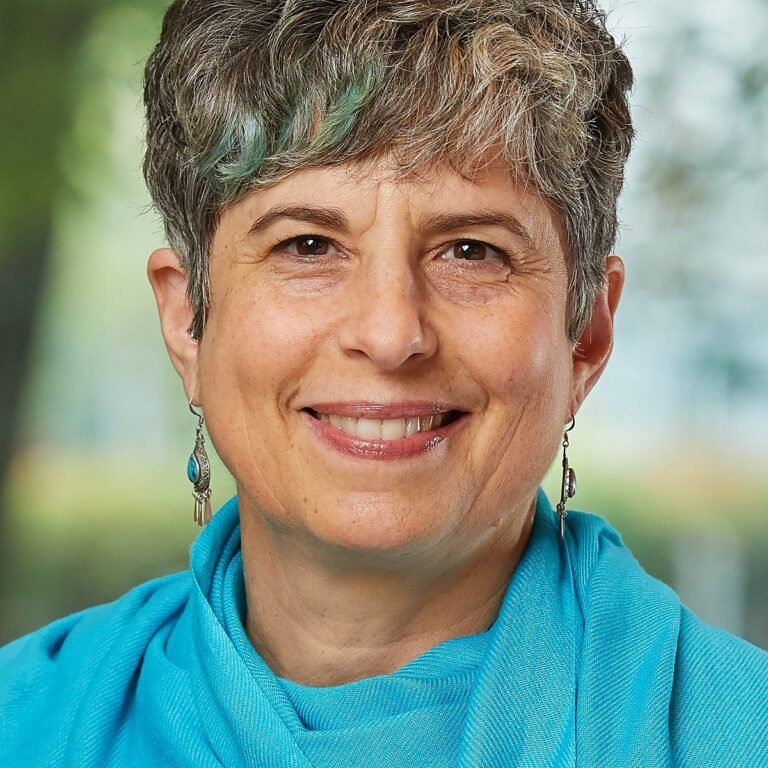
  • Patricia Schechter

    Patricia Schechter is Professor of History at Portland State University (Oregon, USA). She received her BA in American Studies magna cum laude from Mount Holyoke College and then her PhD in History from Princeton University. Her first book, Ida B. Wells-Barnett and American Reform (UNC Press, 2001) won the Sierra Book Prize from the Western Association of Women Historians. Her subsequent publications and public history projects have been recognized for their excellence by the Oral History Association, Library Choice, and the American Philosophical Society, among others. Their interests include migration, diaspora, and mobility, trade, economy, and global networks, cultural heritage and material culture, identity, race, and ethnicity in historical contexts, memory, myth.
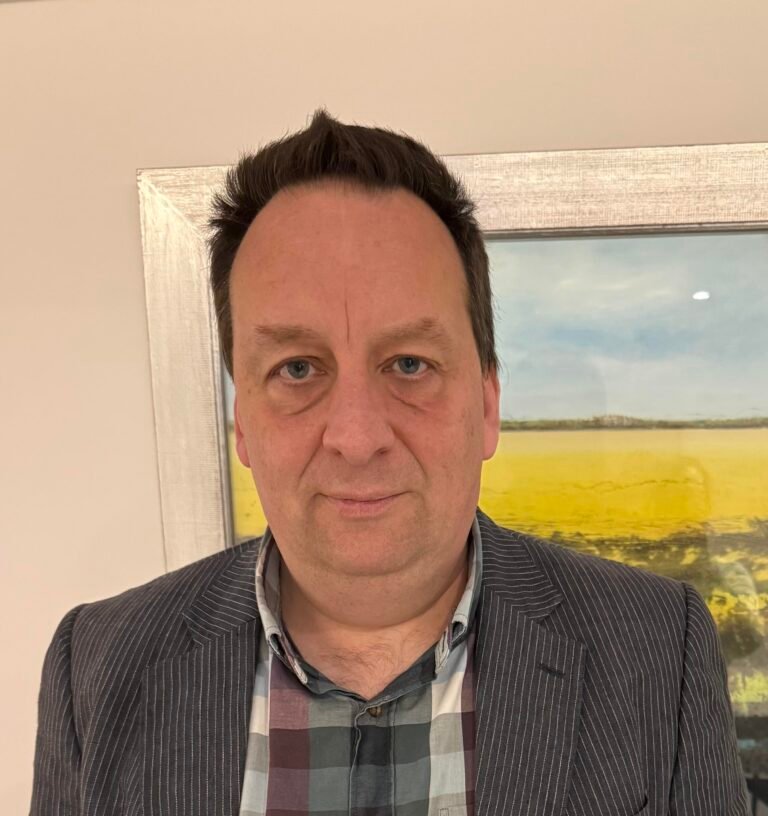
  • Daniel Tejerina

    Daniel Tejerina is Junior Research Fellow at University of Alicante. I’m a Junior Research Fellow at the University Institute for Archaeology and Historical Heritage (INAPH) of the University of Alicante, specialising in the application of digital technologies to cultural heritage. My work focuses on 3D survey, virtual reconstruction, immersive VR/AR experiences and digital museography, combining archaeological research with advanced digital workflows. Their interests include trade, economy, and global networks, science, knowledge, and technology transfer, cultural heritage and material culture. Within PUC, their profile connects to ai, vr/xr, mapping, manuscripts, archives, public history.

  • Stephen Pink

    Stephen Pink is Intellectual Historian at Independent Scholar. His research focuses on religious culture, including the theology of John Wyclif, varieties of Scripture, and English vernacular religion. He also studies post-medieval inquiry and its technological transformations, from the Gutenberg press to modern data science. He is co-organiser of the Ars Inquirendi conference, principal founder of Dark Archives events, and a member of The Scriptomes Project. Within PUC, their profile connects to ai, manuscripts, archives.

  • Karen Pinto

    Karen Pinto is Historian of Islamic Cartography at University of Colorado Boulder. She has spent three decades examining maps in manuscript collections around the world. She has a 2000-strong image repository of Islamic maps—many that have never been published before. Her book Medieval Islamic Maps: An Exploration was published in November 2016 by University of Chicago Press and won a 2017 OAT (Outstanding Academic Title) award from Choice. Their interests include science, knowledge, and technology transfer, cultural heritage and material culture, religious and intellectual history, memory, myth, and public history, medieval islamic maps. Within PUC, their profile connects to vr/xr, mapping, manuscripts, archives, public history, pedagogy.

  • Aurélia Rostaing

    Aurélia Rostaing is Archive Curator at Archives nationales (France). Archive curator since 1996, currently working at National Archives of France. Their interests include science, knowledge, and technology transfer, cultural heritage and material culture, legal and inquisitorial history, memory, myth, and public history. Within PUC, their profile connects to manuscripts, archives, public history, pedagogy, digital humanities, translation. This work supports PUC’s broader effort to connect rigorous scholarship, public access, and cross-border collaboration around histories of cultural and religious difference.

  • Jorge Morato

    Jorge Morato is Information Scientist and Digital Humanities Scholar at Universidad Carlos III de Madrid. I hold a PhD in Information Science and have worked for 26 years in a computer science department on various aspects of information. My work includes NLP, accessibility, linked data, metadata, and knowledge organization systems (KOS). Their interests include intercultural and interreligious exchange, science, knowledge, and technology transfer, cultural heritage and material culture, memory, myth, and public history. Within PUC, their profile connects to ai, vr/xr, manuscripts, archives, public history, pedagogy.

  • Maureen McGuire

    Maureen McGuire is Assistant Professor of Art History at Jacksonville State University. She earned her PhD at the University of California, Santa Cruz. She researches the cultural matronage of elite Late Antique, Byzantine, and Medieval women around the Mediterranean. Their interests include intercultural and interreligious exchange, cultural heritage and material culture, religious and intellectual history, memory, myth, and public history. Within PUC, their profile connects to ai, vr/xr, mapping, manuscripts, archives, public history.

  • Austin Mason

    Austin Mason is Assistant Director of Digital Humanities at Carleton College. He holds a PhD in History from Boston College, with an emphasis on religious history, material culture, archaeology, spatial humanities and the digital humanities, and an M.St. in Medieval British History from Oxford University. His work has been supported by grants from the ACLS, Mellon Foundation, and National Endowment for the Humanities, among others. He is the co-PI for an NEH Digital Humanities Advancement Grant to develop the Virtual Viking Longship Project: A Study in the Future of Liberal Arts Teaching and Research. Their interests include intercultural and interreligious exchange, migration, diaspora, and mobility, trade, economy, and global networks, cultural heritage.

  • Brittany Lugo

    Brittany Lugo is affiliated with Fordham University. Her work contributes to Plus Ultra Collective’s interdisciplinary community through interests in historical research, teaching, and public-facing humanities inquiry. Within PUC, her profile supports the Collective’s broader effort to connect scholars, educators, and learners around questions of cultural exchange, historical interpretation, and collaborative knowledge-making across institutional and disciplinary boundaries.

  • Gavin H. Rogers

    Gavin H. Rogers is a doctoral student at the University of New Mexico specializing in Jewish life in the Iberian Peninsula. He also investigates historical network formations at the intersection of economics and the environment. A recipient of the 2023 International Congress on Medieval Studies Tashjian Award, he contributes to PUC’s work on Iberian history, Jewish studies, networks, and digital approaches to historical evidence.