Northern Europe

  • Ian Torres

    Ian Torres is a teaching faculty member associated with UCCS and Pikes Peak State College. His background includes graduate training in history at the University of Colorado Colorado Springs. Within Plus Ultra Collective, his profile connects teaching, historical study, and public humanities, contributing to the Collective’s interest in accessible education, collaborative learning, and the translation of scholarly knowledge for broader audiences.
  • Sara Torres

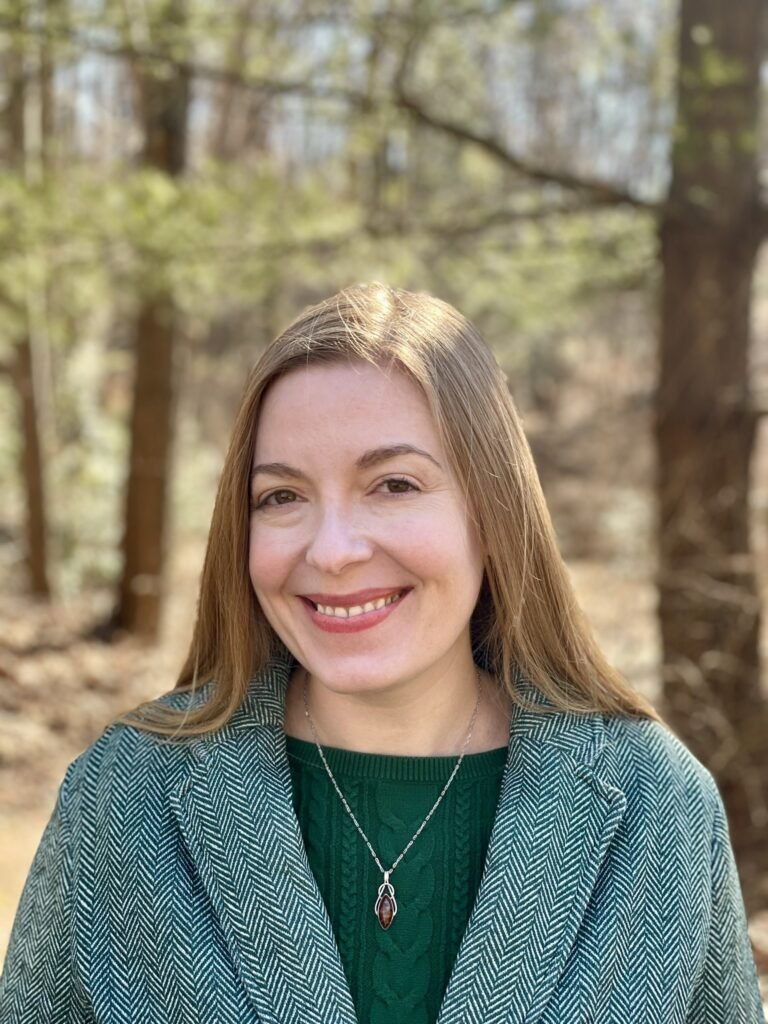
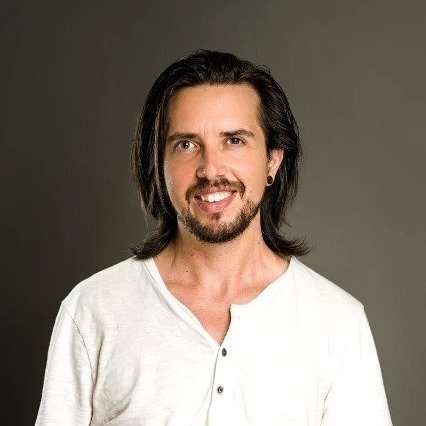
    Sara Torres is Content Strategist; Visiting Scholar at UNM (Visiting Scholar). She has previously held an assistant professorship in English at Converse University, a Third Century Postdoctoral Fellow in Medieval Studies at the University of Virginia, the Speculum Postdoctoral Fellowship at the Medieval Academy of America, and a lectureship at UCLA. Her research interests include global and comparative medieval and early modern studies, translation theory and practice, gender studies, and environmental humanities. Their interests include intercultural and interreligious exchange, migration, diaspora, and mobility, colonialism, empire, and decolonization, science, knowledge, and technology transfer, cultural heritage and material culture, memory, myth, and public history. Within PUC, their profile connects to mapping, manuscripts, public history.

  • Daniel Tejerina

    Daniel Tejerina is Junior Research Fellow at University of Alicante. I’m a Junior Research Fellow at the University Institute for Archaeology and Historical Heritage (INAPH) of the University of Alicante, specialising in the application of digital technologies to cultural heritage. My work focuses on 3D survey, virtual reconstruction, immersive VR/AR experiences and digital museography, combining archaeological research with advanced digital workflows. Their interests include trade, economy, and global networks, science, knowledge, and technology transfer, cultural heritage and material culture. Within PUC, their profile connects to ai, vr/xr, mapping, manuscripts, archives, public history.

  • Victor Temprano

    Victor Temprano is Independent Scholar; Software Developer; Writer at Independent Scholar. He is the founder of Native-Land.ca and the CEO of Mapster Technology Inc. and has worked on dozens of projects in the Digital Humanities. He is the creator of numerous online courses on digital mapping, project management, and programming, and also runs a Youtube channel focused on the history of unusual maps. He works with scholars and academics around the world to help hone concepts and implement new projects with agility and imagination. Their interests include intercultural and interreligious exchange, migration, diaspora, and mobility, colonialism, empire, and decolonization, trade, economy, and global networks, science, knowledge, and technology transfer, cultural heritage and.

  • Lynn Ramey

    Lynn Ramey is Professor of French and Cinema and Media Arts at Vanderbilt University. A scholar of medieval French literature and culture, she integrates digital humanities, immersive environments, and game-based learning into her research and teaching. Her work bridges the study of race and identity in the Middle Ages with innovative approaches to language and cultural pedagogy. She is coauthor of Engagements in Literary Gaming (Routledge, 2026) and coeditor of Teaching Games and Game Studies in the Literature Classroom (Bloomsbury, 2022). Their interests include intercultural and interreligious exchange, trade, economy, and global networks, cultural heritage and material culture, identity, race, and ethnicity in historical contexts. Within PUC, their profile connects to vr/xr.

  • Aurélia Rostaing

    Aurélia Rostaing is Archive Curator at Archives nationales (France). Archive curator since 1996, currently working at National Archives of France. Their interests include science, knowledge, and technology transfer, cultural heritage and material culture, legal and inquisitorial history, memory, myth, and public history. Within PUC, their profile connects to manuscripts, archives, public history, pedagogy, digital humanities, translation. This work supports PUC’s broader effort to connect rigorous scholarship, public access, and cross-border collaboration around histories of cultural and religious difference.

  • Carlos Sanz Díaz

    Carlos Sanz Díaz is Professor of Contemporary History at Universidad Complutense de Madrid. His research explores Spain’s role in European institutions, diplomatic negotiations, and transnational exchanges between Spain and Latin America. He currently holds a Jean Monnet Chair on the History of Europe and European Integration (funded by the European Commission) and leads the research project “Spain in Europe: Power and Influence in the European Community (1986–2004)”, funded by the Spanish Ministry of Science. Their interests include migration, diaspora, and mobility, science, knowledge, and technology transfer, memory, myth, and public history. Within PUC, their profile connects to ai, vr/xr, manuscripts, public history, pedagogy, digital humanities.

  • Austin Mason

    Austin Mason is Assistant Director of Digital Humanities at Carleton College. He holds a PhD in History from Boston College, with an emphasis on religious history, material culture, archaeology, spatial humanities and the digital humanities, and an M.St. in Medieval British History from Oxford University. His work has been supported by grants from the ACLS, Mellon Foundation, and National Endowment for the Humanities, among others. He is the co-PI for an NEH Digital Humanities Advancement Grant to develop the Virtual Viking Longship Project: A Study in the Future of Liberal Arts Teaching and Research. Their interests include intercultural and interreligious exchange, migration, diaspora, and mobility, trade, economy, and global networks, cultural heritage.

  • Ondrej Lee Stolicka

    Ondrej Lee Stolicka is Lecturer and Historian at The Center for Slavic, Eurasian and East European Studies, The University of North Carolina at Chapel Hill. His research area includes connections between the Spanish court and Central European nobility (for example, the Order of the Golden Fleece). He defended his dissertation, Brandenburg-Prussia between Madrid and Vienna: The Failed Diplomatic Mission of Melchior von Ruck (1676–1680), at Universidad Autónoma de Madrid in 2022. Between 2022 and 2024, he worked on his postdoctoral project, Central European Nobility and the Order of the Golden Fleece during the Reign of Leopold I, at the Institute of History of the Czech Academy of Sciences. Their interests include migration.

  • Anthony John Lappin

    Anthony John Lappin is Lecturer in Spanish at Stockholms Universitet. He is also enraptured by the theatricality of the Baroque. Their interests include intercultural and interreligious exchange, colonialism, empire, and decolonization, cultural heritage and material culture, legal and inquisitorial history, religious and intellectual history, memory, myth, and public history. Within PUC, their profile connects to manuscripts, public history, pedagogy, digital humanities, translation, cultural heritage. This work supports PUC’s broader effort to connect rigorous scholarship, public access, and cross-border collaboration around histories of cultural and religious difference.