Pedagogy

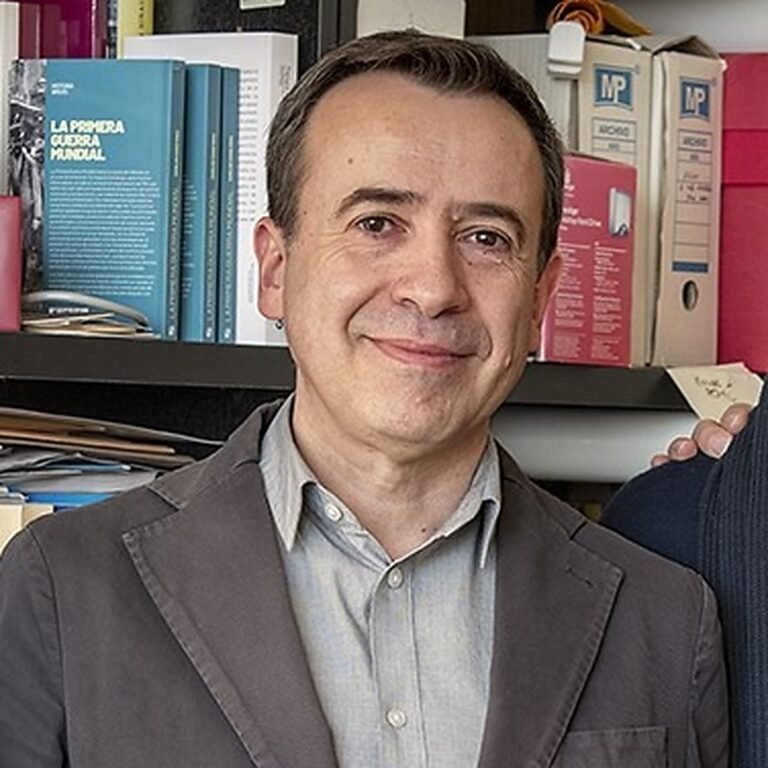
  • Carlos Sanz Díaz

    Carlos Sanz Díaz is Professor of Contemporary History at Universidad Complutense de Madrid. His research explores Spain’s role in European institutions, diplomatic negotiations, and transnational exchanges between Spain and Latin America. He currently holds a Jean Monnet Chair on the History of Europe and European Integration (funded by the European Commission) and leads the research project “Spain in Europe: Power and Influence in the European Community (1986–2004)”, funded by the Spanish Ministry of Science. Their interests include migration, diaspora, and mobility, science, knowledge, and technology transfer, memory, myth, and public history. Within PUC, their profile connects to ai, vr/xr, manuscripts, public history, pedagogy, digital humanities.

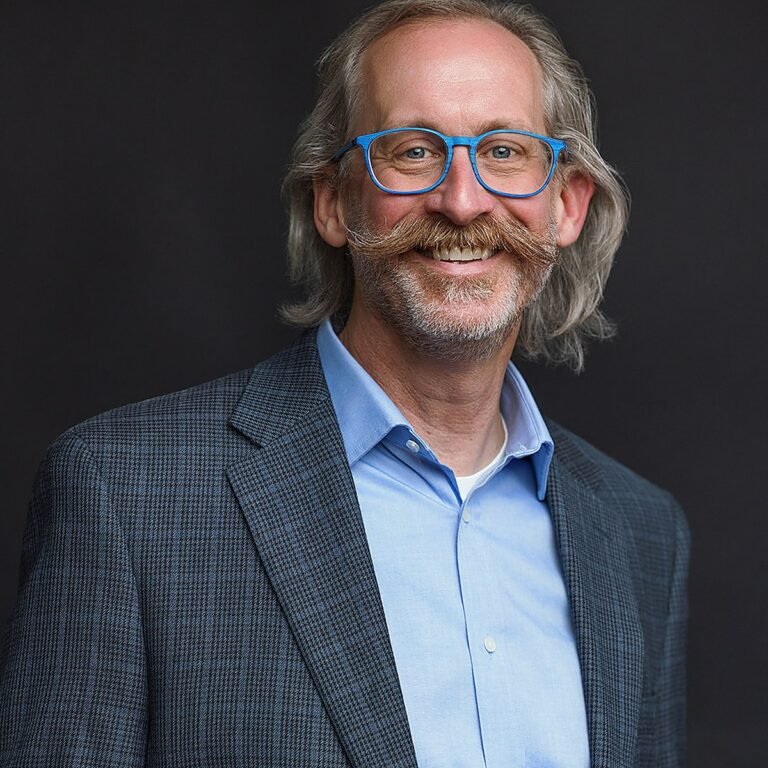
  • Jorge Morato

    Jorge Morato is Information Scientist and Digital Humanities Scholar at Universidad Carlos III de Madrid. I hold a PhD in Information Science and have worked for 26 years in a computer science department on various aspects of information. My work includes NLP, accessibility, linked data, metadata, and knowledge organization systems (KOS). Their interests include intercultural and interreligious exchange, science, knowledge, and technology transfer, cultural heritage and material culture, memory, myth, and public history. Within PUC, their profile connects to ai, vr/xr, manuscripts, archives, public history, pedagogy.

  • David Neville

    David Neville is Digital Liberal Arts Specialist at Grinnell College. He is also the project director for the Immersive Experiences Lab, an interdisciplinary community of inquiry and practice exploring new ways to approach liberal arts topics through the research and development of extended reality (XR) experiences, and the PI for an NEH Digital Humanities Advancement Grant (Level I) that supports the creation of an immersive virtual reality experience for visualizing a Viking longship, and understanding the social, linguistic, cultural, political, and economic roles that the longship played in the Viking Age. Their interests include trade, economy, and global networks, cultural heritage and material culture, research interests include: (1) the learning that occurs.

  • Jack Newman

    Jack Newman is Honorary Fellow; Associate Fellow at University of Kent. He is currently leading The Making of Maidstone project, a Victoria County History initiative that is producing a scholarly volume on the history of Maidstone from 1549-1660 while building a sustainable community of interest around the town’s past through collaborative research. Previously, Jack was a Leverhulme Funded Post-doctoral Researcher at the Centre for Digital Humanities and Literary Criticism, University of Antwerp, where he developed a Handwriting Text Recognition model for fourteenth-century English legal records. Their interests include migration, diaspora, and mobility, colonialism, empire, and decolonization, trade, economy, and global networks, legal and inquisitorial history. Within PUC, their profile connects to ai.

  • Paula Pérez-Rodríguez

    Paula Pérez-Rodríguez is Postdoctoral Marcel Bataillon Fellow at Madrid Institute for Advanced Study / Spanish National Scientific Council. She was a Research Fellow at Fundación Banco Sabadell-Hangar during 2024 and received her PhD at Princeton University in 2023. She also holds an MA from Princeton University (Hispanic & Lusophone Studies), the University of Alcalá (American Cultural Studies) and a BA from the Universidad Autónoma de Madrid. Her research explores the technological and cultural order of verbal and textual arts and radical and collective creative practices, touching on areas like Cultural History, Literary Theory, Book History, popular and vernacular cultures and the intersection of literacy, media, writing and the arts. Their interests include.

  • Sean Perrone

    Sean Perrone is Professor of History at Saint Anselm College. My research initially investigated the fiscal negotiations between the Castilian Crown and the Assembly of the Clergy in the early modern period. I was particularly interested in the tensions between these two institutions and their impact on state-building in the early modern period. My research suggested that representative institutions retained considerably more autonomy and control over financial matters than previously thought. Their interests include migration, diaspora, and mobility, trade, economy, and global networks. Within PUC, their profile connects to mapping, pedagogy, translation, cultural heritage.

  • Genie Milgrom

    Genie Milgrom is Genealogist, Author, and Global Speaker at Independent Scholar. Genealogist, author and Global Speaker Developed a unique method to trace Jewish Lineages to the 1400s Past President of the Society for Crypto Judaic Studies Past President of the Society of Jewish Genealogy President of Tarbut Sefarad Fermoselle in Barcelona Author of My 15 Grandmothers, How I found my 15 Grandmothers, Pyre to Fire and The Recipes of my 15 Grandmothers all available on Amazon in English and Spanish Speaker at the Knesset on the topic of anusim and speaker at the Press Box at the EU Parliament Winner of the 2015 and 2018 and 2020 Latin Author Book Award Winner.

  • Batoul Mohsenirad

    Batoul Mohsenirad is Scholar of Arabic Language, Translation, and Comparative Literature at Independent Scholar. Education: PhD in Arabic Language and Literature, Lebanese University (Specialization: Comparative Literature and Translation) Research Areas: Comparative Literature, Translation Studies, Linguistics, and Manuscript Studies Professional Memberships: Member, Scientific Association for Arabic Language and Literature (Iran) Member, International Association of Arabic Language and Literature (UAE) Member, International Federation of Translators (Dubai) Academic Experience: Supervised over 60 postgraduate theses (Master’s and PhD) Reviewer for numerous research articles and dissertations Publications and Contributions: Book Translation: “We and the Heritage of Persia” by Dr. Their interests include science, knowledge, and technology transfer, cultural heritage and material culture. Within PUC, their profile connects.

  • Austin Mason

    Austin Mason is Assistant Director of Digital Humanities at Carleton College. He holds a PhD in History from Boston College, with an emphasis on religious history, material culture, archaeology, spatial humanities and the digital humanities, and an M.St. in Medieval British History from Oxford University. His work has been supported by grants from the ACLS, Mellon Foundation, and National Endowment for the Humanities, among others. He is the co-PI for an NEH Digital Humanities Advancement Grant to develop the Virtual Viking Longship Project: A Study in the Future of Liberal Arts Teaching and Research. Their interests include intercultural and interreligious exchange, migration, diaspora, and mobility, trade, economy, and global networks, cultural heritage.

  • Roger Martínez-Dávila

    Roger Martínez-Dávila is Professor of History; Researcher at University of Colorado Colorado Springs; Universidad Carlos III de Madrid. Roger Martínez-Dávila is a historian and digital humanist specializing in medieval Europe and the Mediterranean, focusing on Christian, Jewish, and Islamic interrelations. He earned his PhD in history from the University of Texas at Austin. Notably, he leads the Deciphering Secrets: Unlocking the Manuscripts of Medieval Spain project and co-directed the NEH Immersive Global Middle Ages Advanced Digital Humanities Institute. Their interests include intercultural and interreligious exchange, trade, economy, and global networks, science, knowledge, and technology transfer, religious and intellectual history, identity, race, and ethnicity in historical contexts. Within PUC, their profile connects to.